
Job Scam Alert: Don't Let a Fake Paycheck Cost You
A work-from-home job can sound like a great opportunity. But if your new “employer” sends you a check and asks you to send money back, stop. You may be the target of a job scam.
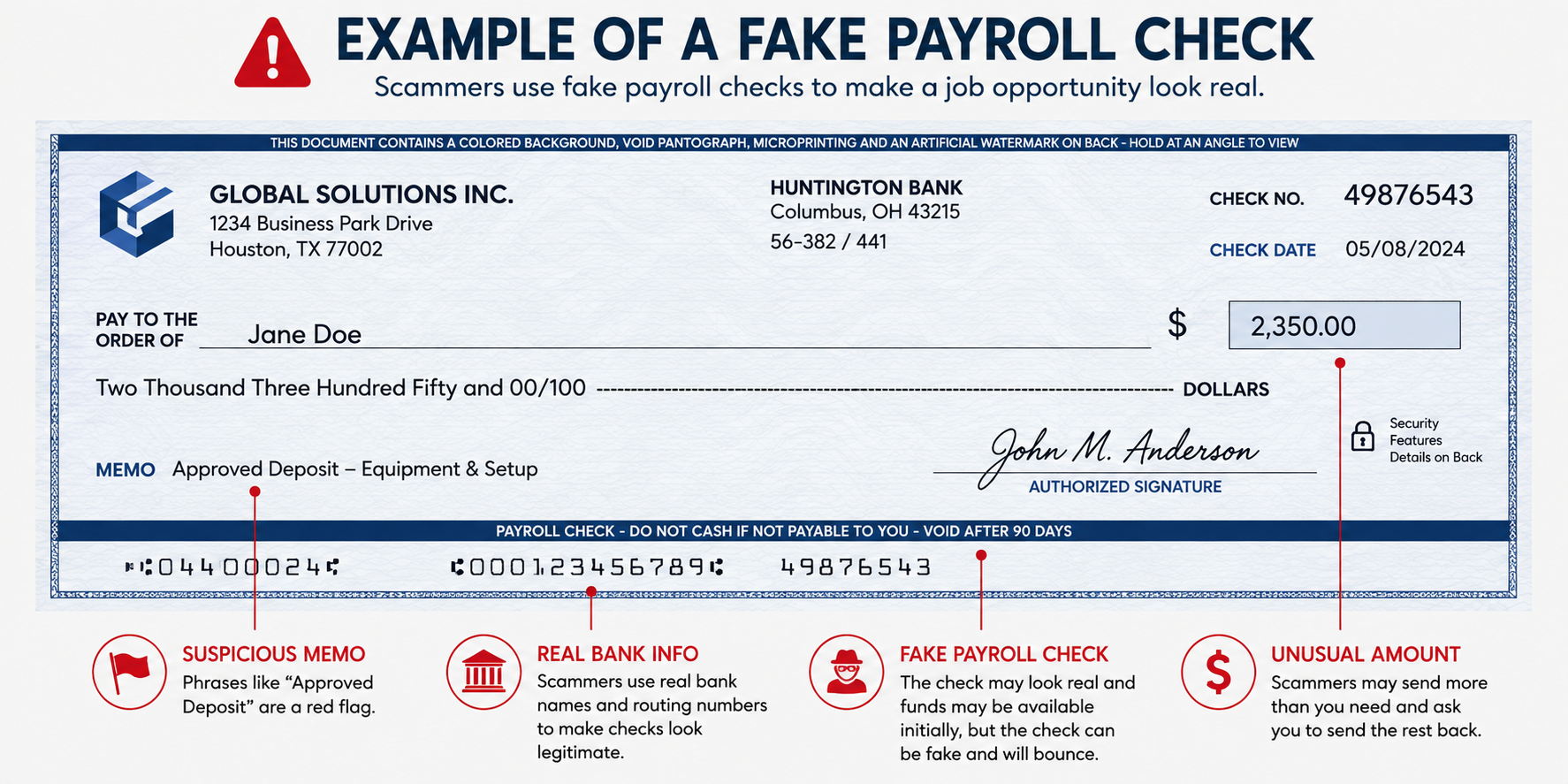
UT Federal Credit Union (UTFCU) is seeing fraudulent checks connected to work-from-home job scams. In these scams, someone may contact you about a job, send you a check to purchase a computer or other equipment, and then instruct you to send some or all of the money back.
The check may look legitimate. The funds may even appear in your account after you deposit them. But that does not mean the check is good.
By the time the check is determined to be fraudulent, you may have already sent real money to the scammer. You could then be responsible for repaying the fraudulent funds.
How the Job Scam Works
While the details can vary, these scams often follow a similar pattern:
1. You receive a job offer.
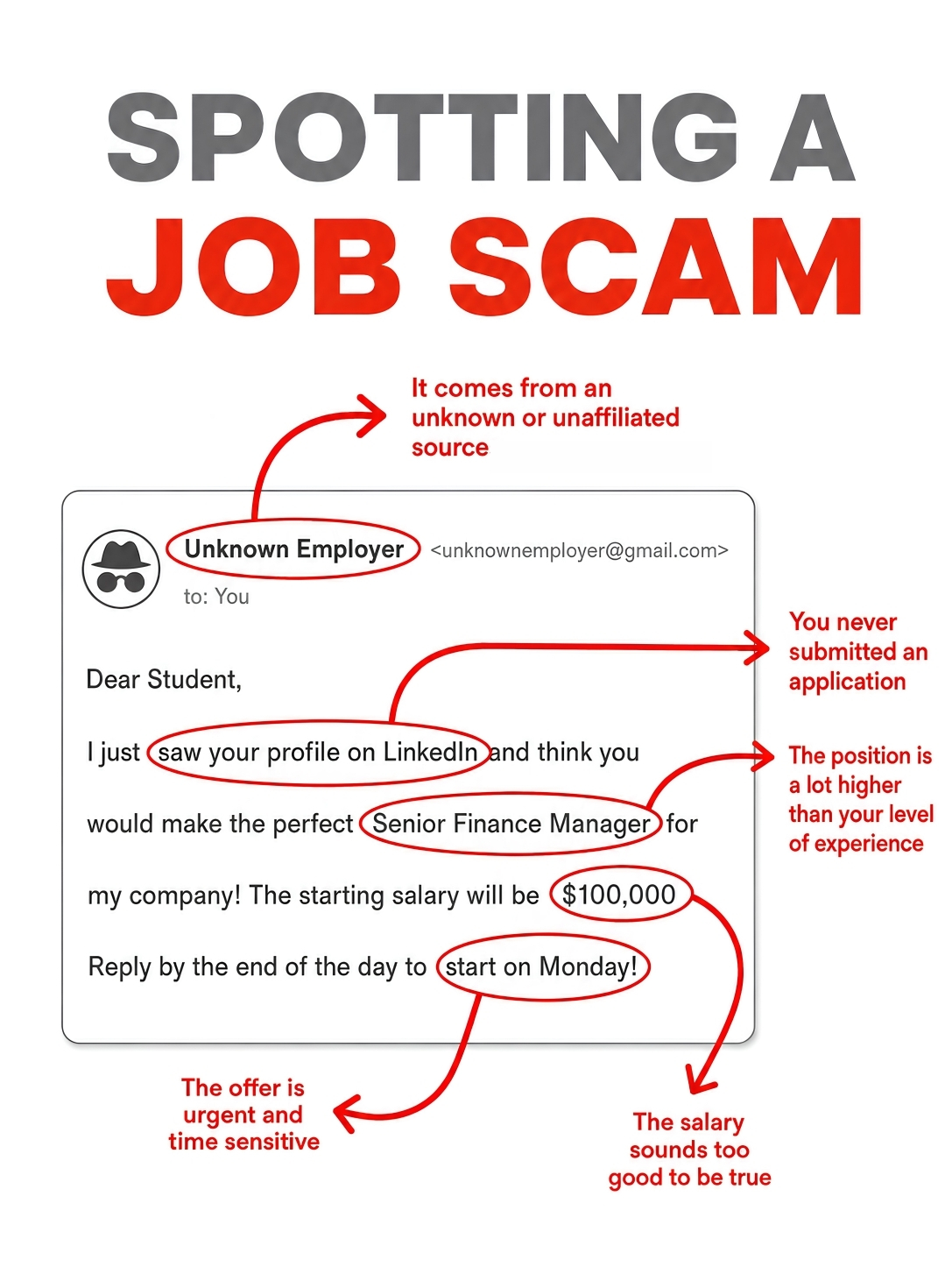
You may apply for a work-from-home position online, respond to a job posting, or even receive an unexpected message from someone claiming to be a recruiter.
2. You’re hired quickly.
The scammer may make the opportunity seem legitimate with a professional-looking website, emails, interview process, or onboarding materials. Some scammers even impersonate well-known companies.
3. You receive a check.
You’re told the check is for a computer, office equipment, supplies, or other expenses related to your new job.
4. You’re instructed to deposit the check.
The scammer may tell you that the money will cover the equipment and that anything left over should be returned.
5. You send money to the scammer.
You may be asked to send money through a payment app, wire transfer, gift cards, cryptocurrency, or another method.
6. The check is discovered to be fraudulent.
Even if the funds initially appear available in your account, a fraudulent check can take time to be identified. Once it is determined to be fraudulent, the funds can be removed from your account, leaving you responsible for the money you already sent.
The Federal Trade Commission (FTC) warns that legitimate employers will not send you a check and then instruct you to send part of the money back.
Red Flags of a Job Scam
Not every remote job is a scam, but be cautious if you notice one or more of these warning signs:
- You receive an unexpected job offer, especially through text or social media.
- You're offered a job with little or no interview.
- The position promises unusually high pay for very little work.
- You're pressured to make a quick decision.
- You're asked to pay money to get a job.
- You're asked for sensitive personal or financial information before you've verified the employer.
- You receive a check before you've actually started working.
- You're told to deposit a check to purchase equipment or supplies.
- You're asked to send money back after depositing a check.
- You're instructed to purchase gift cards, send a wire transfer, use cryptocurrency or send money through a payment app.
- The employer asks you to communicate exclusively through text, WhatsApp, Telegram or another messaging platform.
A professional-looking job posting, website, or check doesn't guarantee that an opportunity is legitimate. Scammers can make fake businesses and documents look convincing, and fake checks may even use the names and information of legitimate financial institutions.
How to Protect Yourself
Research the employer
Before accepting a job, research the company independently. Visit the company's official website and look for the position on its careers page.
Don't rely solely on the contact information provided by the person who contacted you. If you're unsure, contact the company using information from its official website and ask whether the job and recruiter are legitimate.
You can also search the company or recruiter's name along with words such as "scam," "fraud," "review," or "complaint."
Never pay to get paid
Legitimate employers pay you. They don't require you to send money to receive a paycheck, purchase equipment, or secure a position.
If you're asked to pay money before receiving a job, that's a major warning sign.
Don't trust a check just because the money appears in your account
This is one of the most important things to remember.
Funds appearing in your account does not necessarily mean a check is legitimate.
Banks are required to make deposited funds available within certain timeframes, but it can take longer to discover that a check is fraudulent. Scammers take advantage of this delay by convincing you to send money before the check is identified as fake.
Don't send money back
If someone sends you a check and tells you to deposit it and send money back, don't do it.
Don't send the money through a wire transfer, payment app, cryptocurrency, gift card, or any other method. Once you've sent the money, it may be difficult or impossible to recover.
Take a second look
Scammers often create a sense of urgency to keep you from slowing down and asking questions.
If something about a job offer doesn't feel right, stop and talk with someone you trust before depositing a check, sharing personal information, or sending money.
What Should You Do If You Receive a Suspicious Check?
Don't deposit it or send money to anyone based on the instructions you received.
If you've already deposited the check, don't spend or transfer the funds. Contact UTFCU as soon as possible so we can help you understand what steps to take.
If you've already sent money to a scammer, act quickly. Contact the company or financial institution you used to send the money and report the fraud. You can also report job scams to the FTC at ReportFraud.ftc.gov.
Remember: If the Job Sends You a Check, Stop and Think
A job opportunity should put money in your pocket, not ask you to send money out of it.
If a potential employer sends you a check and asks you to deposit it, purchase equipment and return money, that's a major red flag.
When it comes to unexpected job offers and checks, it's better to pause and verify than to find out later that the opportunity was a scam.
When in doubt, contact UTFCU before you send money. We're here to help you protect what matters.
« Return to "Blog"